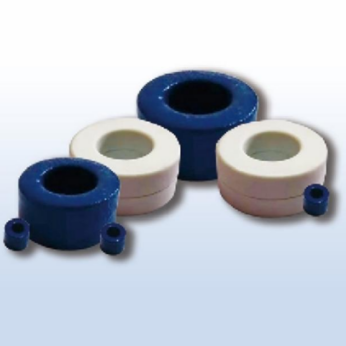
In the field of electrical engineering and instrumentation, miniature current transformers (CTs) have become increasingly important due to the rising demand for compact, high-precision devices in power measurement and protection systems. A critical component in these miniature CTs is the core material, which directly affects the efficiency, accuracy, and size of the transformer. Among the available options, low-loss nano-crystalline ring cores have emerged as a leading solution, offering a unique combination of high magnetic performance, reduced energy loss, and compact form factor compact nano-crystal ring-shaped core for miniature ct.
Understanding Nano-Crystalline Ring Cores
Nano-crystalline materials are metallic alloys that have undergone a rapid cooling process to achieve an ultra-fine crystalline structure. This structure, typically in the range of 10 to 50 nanometers, provides exceptional magnetic properties. When shaped into ring cores, these materials become ideal for current transformers used in miniature applications. The ring-shaped design ensures a closed magnetic path, minimizing leakage flux and enhancing the transformer’s efficiency.
Low-loss nano-crystalline ring cores for current transformers stand out due to their low core loss, high saturation flux density, and superior permeability. These characteristics enable engineers to design CTs that are both smaller and more precise than traditional ferrite or silicon steel cores.
Advantages of Low-Loss Nano-Crystalline Ring Cores
High Efficiency and Low Energy Loss
One of the primary advantages of low-loss nano-crystalline ring cores for current transformers is their remarkably low energy loss. In electrical devices, core loss, which includes hysteresis and eddy current losses, contributes to heat generation and energy inefficiency. Nano-crystalline cores exhibit minimal hysteresis loss due to their fine grain structure and low coercivity. Additionally, their thin lamination and high electrical resistivity reduce eddy current loss. This combination allows for highly efficient CT operation, even at high frequencies, making them suitable for modern smart grids and energy monitoring systems.
Compact Size for Miniature CTs
Space constraints are a significant concern in the design of miniature CTs, especially in applications such as portable power meters, electric vehicles, and embedded monitoring systems. The high permeability of nano-crystalline materials allows engineers to achieve the required magnetic performance with a smaller core volume. Ring-shaped cores further enhance space efficiency by providing a uniform magnetic path without the need for additional magnetic shielding. As a result, low-loss nano-crystalline ring cores enable the production of CTs that are not only smaller but also lighter and easier to integrate into compact electronic systems.
Improved Accuracy and Stability
Accuracy is critical for current transformers, particularly in protective relays and precision measurement devices. Low-loss nano-crystalline ring cores offer high linearity in their magnetization curve, which reduces errors caused by core saturation. This stability ensures that the CT can accurately reproduce the primary current in the secondary winding, even under varying load conditions. Moreover, the low temperature coefficient of nano-crystalline materials maintains consistent performance across a wide temperature range, ensuring reliable operation in harsh environments.
Wide Frequency Range Performance
Another significant benefit of using low-loss nano-crystalline ring cores for current transformers is their excellent performance across a wide frequency range. Unlike traditional ferrite cores, which tend to lose efficiency at higher frequencies, nano-crystalline materials maintain low losses even in high-frequency applications. This property makes them ideal for modern CT applications, including high-speed digital protection systems and high-frequency switching power supplies, where accuracy and response time are crucial.
Applications in Miniature CTs
Power Monitoring and Smart Meters
With the increasing adoption of smart meters and real-time energy monitoring systems, miniature CTs are required to deliver precise measurements without occupying significant space. Low-loss nano-crystalline ring cores provide the ideal magnetic properties for such applications, allowing for compact and energy-efficient CT designs. Their low loss ensures minimal heat generation, which is critical in enclosed meter housings, and their high permeability enables accurate readings even at low currents.
Electric Vehicles and Hybrid Systems
In electric vehicles (EVs) and hybrid systems, current monitoring is essential for battery management, charging systems, and motor control. The compactness of nano-crystalline ring cores allows CTs to be embedded in tight spaces within the vehicle’s electrical network. The high accuracy and stability of these cores ensure reliable monitoring of battery currents and motor performance, contributing to overall system safety and efficiency.
Industrial Automation and Robotics
Industrial automation and robotics require precise current sensing for motor control and energy optimization. Miniature CTs with low-loss nano-crystalline ring cores can provide accurate feedback in high-frequency switching environments common in servo drives and automated machinery. Their ability to handle high transient currents and maintain performance under varying operational conditions makes them a preferred choice in industrial applications.
Design Considerations
While low-loss nano-crystalline ring cores offer numerous benefits, designers must carefully consider certain factors to maximize their performance. Core geometry, winding techniques, and insulation methods play a crucial role in minimizing leakage flux and ensuring uniform magnetic distribution. Additionally, proper thermal management is necessary to prevent localized heating, even with low-loss cores, especially in high-current applications. Selecting the appropriate core size and material grade based on frequency, current range, and environmental conditions is critical to achieving optimal CT performance.
Future Trends
As the demand for compact, high-precision current transformers continues to grow, innovations in nano-crystalline materials and ring-shaped core designs are expected to advance further. Research is ongoing to enhance the magnetic properties, reduce production costs, and develop new core geometries that enable even smaller and more efficient CTs. Integration with digital monitoring and IoT-enabled systems will likely drive further adoption of these low-loss nano-crystalline ring cores in diverse applications, from residential energy meters to industrial smart grids.
Conclusion
Low-loss nano-crystalline ring cores for current transformers represent a breakthrough in miniature CT design, combining compact size, high efficiency, and superior accuracy. Their unique magnetic properties, including low energy loss, high permeability, and stable performance across temperature and frequency ranges, make them ideal for modern power measurement, monitoring, and protection systems. From smart meters and electric vehicles to industrial automation, these ring-shaped cores are enabling smaller, more efficient, and more reliable CTs than ever before. As technological advancements continue, the role of nano-crystalline ring cores in miniature CT applications is set to expand, offering engineers unprecedented flexibility and performance in compact electrical devices.