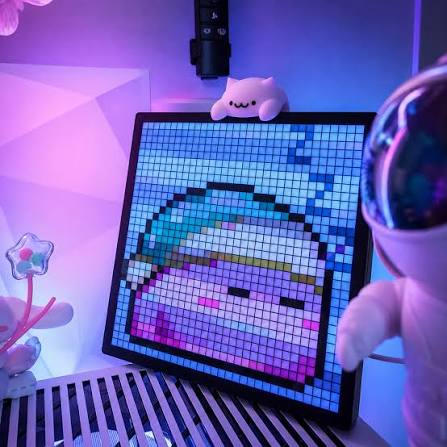
In a world filled with notifications, apps, dashboards, and digital screens, getting useful information at a glance has become increasingly important. People want to know the time, weather, reminders, schedules, messages, and other daily updates without constantly checking a smartphone. A pixel art information display offers an engaging way to present everyday information while adding personality and visual creativity to a room.
Unlike conventional digital screens that often focus purely on functionality, pixel-based displays combine practical information with colorful graphics and customizable artwork. Their distinctive appearance makes ordinary updates more noticeable and enjoyable, whether the display is placed on a work desk, bedside table, shelf, kitchen counter, or entertainment area.
Turning Useful Information Into Visual Experiences
Traditional information displays are usually designed around text and numbers. While these formats are efficient, they can sometimes feel plain or repetitive. A pixel art information display changes that experience by using small illuminated pixels to create recognizable images, icons, animations, patterns, and visual indicators.
For example, instead of simply showing a temperature number, a display can pair the information with a sunny, cloudy, rainy, or snowy pixel illustration. A clock can appear alongside an animated character, while a calendar reminder can be represented through an attractive icon. This approach makes information easier to notice without requiring the user to study a complicated interface.
The visual element can also make routine information feel more personalized. Rather than treating a screen as another piece of technology, users can make it part of their environment and décor.
Why Pixel-Based Displays Attract Attention
One of the strongest advantages of pixel art is its recognizable visual language. Pixel graphics are built from small blocks, giving them a nostalgic appearance inspired by classic digital games and early computer graphics. At the same time, modern technology allows these displays to deliver much more sophisticated functionality.
The combination of simplicity and creativity helps important information stand out. A bright animation can immediately attract attention when a reminder appears. A changing weather icon can communicate conditions faster than reading a sentence. A colorful clock design can also make checking the time feel more interactive.
This is particularly useful in busy environments where people do not want to spend several seconds interpreting information. A well-designed display can communicate a simple message through visual patterns almost instantly.
Bringing Personality to Desks and Workspaces
Workspaces are among the most suitable locations for a pixel art information display. Desks often contain computers, keyboards, notebooks, chargers, and other functional equipment, making them highly practical environments. Adding a visually interesting display can introduce a more creative element.
A display can show the current time during work sessions, provide weather information before leaving the office, or present reminders throughout the day. Some designs can also display custom pixel artwork during periods when no important information needs to be shown.
For students, creators, programmers, and remote workers, this can make the desk environment feel more personal. Instead of opening another application to check basic information, users can glance toward a dedicated display.
Making Bedrooms More Convenient
A bedroom is another environment where quick information can be useful. A pixel art information display can provide the time, alarms, weather conditions, or other reminders without requiring a phone to be picked up.
The visual presentation can also contribute to the atmosphere of the room. Soft animations, simple characters, or calming pixel scenes can make the display function as a decorative object when practical information is not being viewed.
For nighttime use, brightness controls and appropriate display settings are important. A well-designed device should provide enough visibility without becoming distracting in a dark room.
Combining Functionality With Decoration
Modern technology is increasingly expected to serve more than one purpose. Consumers often prefer devices that provide useful functions while also fitting naturally into their surroundings. A pixel art information display is an excellent example of this combination.
Its visual appearance can complement gaming rooms, creative studios, modern offices, bedrooms, or casual living spaces. Different artwork styles can create completely different moods. A colorful animation may suit an entertainment setup, while minimalist pixel graphics may work better in a professional workspace.
This flexibility means the display does not need to look like a conventional piece of office equipment. It can become part of the room’s overall visual identity.
Customization Makes Everyday Information More Interesting
Customization is one of the most appealing aspects of pixel-based technology. Users may want different graphics depending on their preferences, activities, or surroundings. A display could feature a favorite character, seasonal artwork, animated landscapes, animals, geometric patterns, or simple status icons.
Customization can also improve the usefulness of information. Different visual symbols can represent different types of alerts. For example, a task reminder might use one icon, a weather update another, and an upcoming event a third.
This creates a visual vocabulary that users can quickly recognize. Over time, these familiar symbols can make everyday interactions faster because the user learns what each visual element means.
Supporting Better Digital Habits
Smartphones are extremely convenient, but constantly checking them can become distracting. A dedicated information display can provide certain basic updates without opening social media, email, or other applications.
This can be particularly valuable during focused work. Instead of unlocking a phone simply to check the time or weather, a person can look at the display and immediately return to the task.
The goal is not to replace smartphones or computers. Instead, the display can handle simple information that does not require a full interactive interface. By separating quick information from more distracting digital activities, users may be able to create a more focused environment.
Useful Information for Different Daily Routines
The information shown on a pixel art information display can vary depending on the user’s routine. Someone working from home might prioritize time, calendar events, weather, and reminders. A student might prefer a study timer, schedule, or motivational artwork.
In a kitchen, the display could provide time-based information or reminders. In a gaming room, it could emphasize animated artwork and entertainment-focused visuals. In a creative studio, it could display custom designs that contribute to the room’s atmosphere.
This adaptability makes pixel displays useful across many parts of everyday life.
Choosing the Right Display for Your Space
When selecting a pixel art information display, users should consider more than appearance. Screen size, viewing distance, brightness, connectivity, customization options, power requirements, and available information features can all influence the experience.
A compact model may be ideal for a small desk or bedside table, while a larger display can make a stronger visual statement in a living room or studio. Brightness adjustment is especially useful when the display will be used throughout both daytime and nighttime.
Customization support is another important factor. People interested in pixel artwork may want a device that offers multiple visual styles, animations, or ways to create personalized designs.
The Future of Visual Everyday Information
As digital devices become increasingly integrated into homes and workspaces, visual information tools are likely to become more creative. People are no longer interested only in devices that perform a function; they also want technology that reflects their personality and environment.
A pixel art information display represents this shift by transforming basic digital information into an interactive visual experience. Its value comes from the combination of convenience, customization, creativity, and recognizable design.
Future displays may offer even more personalized information, dynamic artwork, contextual notifications, and smarter integration with connected devices. These developments could make small ambient displays an increasingly useful part of everyday environments.
Conclusion
Everyday information does not have to appear as plain text, numbers, or ordinary notifications. A pixel art information display can turn routine updates into colorful and memorable visual experiences. From desks and bedrooms to creative studios and entertainment spaces, these displays can provide useful information while enhancing the character of their surroundings.
By combining practical functions with customizable pixel artwork, this type of technology makes digital information more engaging and accessible. As people look for smarter ways to manage information without adding unnecessary distractions, visually focused displays offer an appealing balance between functionality and creativity.