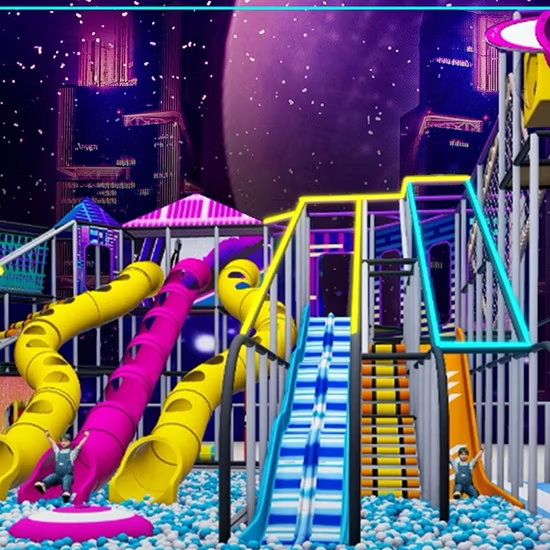
Custom playgrounds are becoming increasingly popular among schools, childcare centers, family entertainment venues, shopping malls, hotels, and indoor recreation facilities. Rather than choosing a standard playground package, many businesses want play environments designed around their available space, target age groups, brand identity, and specific customer needs. This is where a professional soft play equipment manufacturer can provide valuable support. From initial concepts and space planning to manufacturing, installation, and customization, an experienced manufacturer can help transform an idea into a functional and engaging play environment.
Understanding the Needs of a Custom Playground
Every playground project has different requirements. The size of the facility, ceiling height, floor layout, age range, expected visitor capacity, theme, budget, and intended activities can all influence the final design. A professional soft play equipment manufacturer begins by understanding these factors before recommending equipment.
For example, a small indoor entertainment center may need a compact structure that makes efficient use of vertical space. A large family entertainment center may require a multi-level play system featuring slides, climbing areas, tunnels, ball pits, obstacles, and interactive activities. By evaluating the project requirements carefully, manufacturers can create a design that balances entertainment value, safety, and available space.
Creating Customized Playground Concepts
One of the biggest advantages of working with a specialized manufacturer is the ability to develop customized concepts. Instead of limiting a business to off-the-shelf equipment, manufacturers can work with designers and clients to create a playground that matches a particular vision.
Customization may include the overall shape of the play structure, activity selection, color combinations, themes, entrance features, slides, climbing elements, and interactive components. A playground could be designed around themes such as space exploration, jungle adventures, underwater worlds, castles, transportation, or educational environments.
A soft play equipment manufacturer can use design and visualization tools to help clients understand how the finished playground may look. Three-dimensional concepts can also make it easier to identify potential layout problems before production begins.
Making Better Use of Available Space
Space optimization is an important consideration for indoor playground projects. Facilities often have unusual room shapes, structural columns, low ceilings, entrances, emergency exits, or other architectural restrictions. A standard playground system may not fit efficiently in such environments.
Custom manufacturing allows equipment to be designed according to the dimensions of the facility. Manufacturers can consider the room’s length, width, and height while arranging different activities in a practical sequence.
Vertical space can also be used effectively through multiple levels, platforms, bridges, tunnels, and climbing features. This approach can increase the number of activities available without requiring a larger floor area. Careful planning ensures that children can move through the playground comfortably while staff members can maintain visibility and supervision.
Combining Fun With Safety
Safety should remain a central part of every playground design. Customization should never mean compromising on safe construction or responsible planning. A professional manufacturer considers factors such as protective padding, appropriate materials, structural stability, access points, fall protection, spacing, and age-appropriate activities during the design process.
Soft play equipment is particularly useful for indoor playgrounds because padded surfaces and covered components can reduce the impact of accidental falls. However, equipment still needs to be properly designed, manufactured, installed, and maintained.
An experienced soft play equipment manufacturer can help clients select equipment appropriate for different age groups. Areas for toddlers, young children, and older children can be separated or designed with activities suited to their physical abilities. This creates a more organized environment while helping operators manage different groups of visitors.
Supporting Brand and Theme Integration
A customized playground can also become an important part of a business’s visual identity. Family entertainment centers often want their play areas to reflect their brand, while hotels, restaurants, and shopping centers may want playgrounds that complement their overall design.
Manufacturers can incorporate selected colors, logos, shapes, characters, and themed decorative elements into the playground. The result can feel more distinctive than a generic play structure.
For commercial facilities, visual appeal can also influence customer experience. A colorful and thoughtfully designed play area may encourage children to engage with the environment while giving parents a memorable impression of the facility.
Selecting the Right Activities
A successful custom playground is more than an attractive structure. It should provide a variety of activities that encourage children to move, explore, interact, and challenge themselves.
Depending on the target audience and available space, a customized design may include climbing walls, soft obstacles, crawl tunnels, ball pools, slides, bridges, stepping platforms, interactive games, spinning elements, and sensory activities.
The manufacturer can help determine which combination provides the best balance of physical activity and entertainment. Activity placement is also important. High-energy areas can be separated from quieter or younger children’s sections to create smoother movement throughout the facility.
Supporting the Design and Manufacturing Process
Once a concept is approved, the manufacturer can move the project toward production. This may involve detailed drawings, material selection, component specifications, structural planning, color confirmation, and manufacturing schedules.
Working with a manufacturer throughout this process can reduce communication problems because the design and production teams are connected. Changes can also be evaluated before manufacturing begins, which can help prevent expensive modifications later.
Quality materials are another important consideration. Depending on the equipment and application, manufacturers may use padded foam, protective coverings, durable fabrics, metal frames, plastics, wood components, and other materials selected for commercial environments.
Installation and Project Assistance
Custom playground projects do not end when manufacturing is complete. Installation is another important stage. Large indoor playground structures can contain numerous interconnected components, making professional installation valuable.
A capable soft play equipment manufacturer may provide installation guidance or installation services according to the project arrangement. Proper assembly helps ensure that components are positioned correctly and that the completed structure performs as intended.
Manufacturers may also provide documentation, maintenance recommendations, and guidance for inspecting equipment. These resources can help operators establish regular maintenance routines and keep the playground in good condition.
Designing for Long-Term Business Value
Commercial playgrounds need to be entertaining, but they also need to support the operator’s business goals. A well-designed custom playground can help a facility use its available space efficiently and create an environment that encourages repeat visits.
The design can be planned around expected visitor numbers, different age groups, party areas, seating locations, staff visibility, and customer circulation. These factors can influence how easily the facility operates on busy days.
Customization may also allow businesses to plan for future changes. Modular elements or adaptable components can make it easier to refresh parts of the playground as customer preferences change.
Why Manufacturer Collaboration Matters
Choosing a manufacturer that understands custom playground development can make the project more efficient from beginning to end. Instead of purchasing unrelated equipment from different sources, businesses can work with one experienced partner to coordinate design, customization, manufacturing, and installation.
Communication is especially important during custom projects. Clients should be able to discuss their goals, provide feedback on designs, ask questions about materials, and understand how the proposed equipment fits within the facility.
A collaborative approach can turn a basic playground idea into a carefully planned recreational environment that reflects the needs of both children and operators.
Conclusion
Custom playground design gives businesses the opportunity to create unique environments that make better use of available space while delivering engaging play experiences. A professional soft play equipment manufacturer can support this process by providing customized concepts, space planning, themed designs, activity selection, safety-focused construction, manufacturing, installation, and ongoing guidance.
From a compact indoor play area to a large commercial entertainment center, customized equipment can help create a playground that is visually appealing, practical, durable, and suited to its intended audience. By working closely with an experienced manufacturer from the planning stage through completion, businesses can develop a play environment designed specifically around their space, brand, customers, and long-term goals.