1. Understanding the Characteristics of HPMC in Concrete and Mortar
1.1 Major Benefits of HPMC as a Multifunctional Admixture
Hydroxypropyl Methylcellulose (HPMC) has established itself as a widely used additive in cement-based concrete and mortar because it provides several important functions within a single formulation.
1.1.1 Outstanding Water Retention
Water retention is one of the most important advantages offered by HPMC. Cement needs an adequate supply of water to complete its hydration process. However, porous or highly absorbent substrates, including masonry surfaces, can quickly draw water away from freshly applied mortar through capillary absorption.
When water is lost too rapidly, cement hydration may become incomplete, potentially resulting in poor adhesion, inadequate strength development, and surface cracking. Once HPMC is dispersed in water, it can create a protective colloidal structure around cement particles. This structure helps form a barrier that slows both evaporation and the migration of water into absorbent substrates, allowing the cementitious system to maintain a more suitable moisture environment during hydration.
1.1.2 Effective Rheology and Workability Control
HPMC also functions as an efficient thickening and rheology-modifying agent. Even relatively small quantities can increase the viscosity of cement paste and improve the smoothness and consistency of mortar. This can reduce friction among sand particles and make the material easier to spread and manipulate.
Another important benefit is improved resistance to sagging. During vertical tile installation, for example, the rheological structure generated by HPMC increases the yield stress of the mortar. This helps the material remain in position and reduces the possibility of freshly installed tiles sliding downward under their own weight.
1.1.3 Beneficial Thermal Gelation Behavior
HPMC has a distinctive thermal response. It is readily dispersed or dissolved under appropriate cold-water conditions and can undergo gelation when exposed to elevated temperatures.
Because cement hydration releases heat, this thermal behavior can contribute to changes in the early structure of cement-based materials. As the temperature rises during hydration, HPMC can form a temporary gel network that provides additional structural support and assists the mortar in retaining its intended shape during early setting.
1.1.4 Strong Resistance to Washout
HPMC can also be valuable in underwater non-dispersible concrete applications where resistance to washout is essential. The polymer can help maintain cohesion and prevent cementitious components from being excessively dispersed when exposed to moving water.
Research has indicated that interactions between HPMC and hydration products such as calcium silicate hydrate (C-S-H) can contribute to the stability of cement-based systems exposed to water. This makes HPMC a useful component for applications where underwater integrity is a major concern.
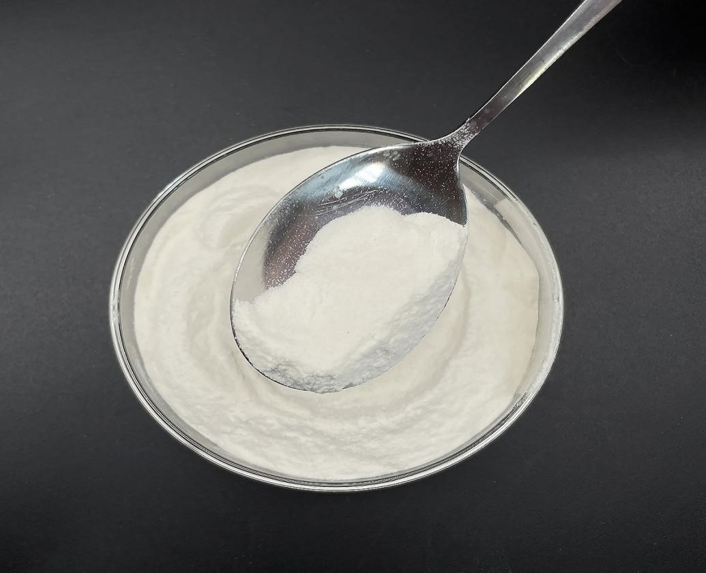
TRUNNANO Hydroxypropyl Methylcellulose HPMC Powder
1.2 Limitations of Conventional HPMC
Despite its many advantages, HPMC also introduces several challenges. These limitations have encouraged researchers and manufacturers to explore improved modification technologies.
1.2.1 Potential Reduction in Mechanical Strength
One of the most important disadvantages associated with conventional HPMC is its potential influence on hardened mortar strength. Research has reported substantial reductions in compressive and flexural strength when HPMC is incorporated into certain cementitious formulations.
The effect can also be observed in specialized materials. In some 3D-printing mortar systems, for example, HPMC has been associated with significant reductions in mechanical performance. Simply extending the curing period may not completely restore the strength that has been lost.
In aluminate cement-gypsum systems, HPMC can increase porosity and alter pore dimensions while also affecting the morphology of hydration products. These changes can subsequently influence flexural strength, compressive strength, and tensile bond performance.
1.2.2 Why HPMC Can Lower Strength
The reduction in strength generally results from several interacting mechanisms. First, HPMC can contribute to air entrainment, producing additional microscopic air voids within the cementitious matrix. These pores decrease the compactness and density of the hardened material.
Second, HPMC can slow certain stages of cement hydration. While this behavior can be useful for improving workability and water retention, excessive retardation may delay early strength development.
The combination of increased porosity and slower hydration can therefore create a conflict between fresh-state performance and hardened-state mechanical properties.
1.2.3 The Trade-Off with Fluidity
The thickening action of HPMC can also reduce mortar flowability. As viscosity increases, the material generally becomes less fluid, creating a balance that formulators must carefully manage.
At high water-to-cement ratios, the effectiveness of the water-retaining structure may also change because the polymer system becomes more diluted. Strong shear forces can further disturb the protective film or network, potentially reducing its ability to recover completely.
These limitations demonstrate why conventional HPMC systems often require careful optimization of dosage, viscosity, water content, and cement composition.
2. TRUNNANO’s Nano-Modification Technology for Addressing HPMC Limitations
2.1 A Nanoparticle-Based Triple Compensation Strategy
TRUNNANO has focused on addressing the fundamental conflict between HPMC’s useful water-retention and thickening functions and its potential impact on strength.
The proposed solution involves nano-synergistic modification. Nanomaterials such as amorphous nano-silica can be incorporated into HPMC-based systems to establish an organic-inorganic composite structure. This approach is designed to compensate for several of the weaknesses associated with conventional HPMC.
2.1.1 Nano-Filling and Matrix Densification
Nanoparticles possess an extremely high specific surface area and can occupy very small spaces within a cementitious matrix. In a modified HPMC system, these particles can help fill microscopic voids associated with entrained air and spaces between cement particles.
By improving particle packing and reducing internal defects, nano-materials can increase matrix compactness. This provides a potential route for offsetting the density and strength losses associated with excessive air entrainment.
2.1.2 Nucleation and Hydration Enhancement
Nanoparticles can additionally act as nucleation sites for cement hydration products. Their presence may facilitate the formation and distribution of C-S-H gel, supporting a more developed hydration structure.
This hydration-promoting effect can help counterbalance the retardation associated with HPMC. More extensive formation of hydration products can contribute to improved strength development, particularly during the early stages of curing.
2.1.3 Strengthening the Interfacial Transition Zone
The interface between cement paste and aggregate is another critical area for mechanical performance. Defects and weak regions within the interfacial transition zone (ITZ) can become pathways for crack development.
A combination of HPMC and appropriately selected nanoparticles can help improve the microstructure around these interfaces. By reducing microscopic defects and strengthening the transition region, the composite system can potentially achieve greater overall structural integrity.
2.2 Demonstrated Performance Improvements
The nano-modification approach has been investigated through experimental work and related patented technologies. Certain formulations combining HPMC with amorphous nano-silica and other components have been developed to provide internal curing, shrinkage-control, and strength-enhancing functions.
These approaches are intended to address the combination of high shrinkage and insufficient strength that can occur in conventional HPMC-containing systems.
Research involving 3D-printed ultra-high-performance concrete has also demonstrated the potential of combining nano-clay with HPMC. In reported experiments, printed components achieved compressive strengths above 160 MPa, illustrating how nano-modification can help balance the rheological requirements of printing with high hardened strength.
2.3 Quality Control from Molecular Design to Finished Product
The performance of HPMC depends on numerous material parameters, including viscosity, reaction conditions, solvent activity, degree of substitution, and hydroxypropoxy content.
For this reason, consistent product performance requires control throughout the manufacturing process. TRUNNANO applies its understanding of HPMC synthesis and nano-material technology to develop controlled formulations and customized products.
A systematic quality-control process helps maintain consistency between production batches while allowing formulations to be adapted for different concrete and mortar requirements.
Technology Comparison: Conventional HPMC vs. TRUNNANO Nano-Modified HPMC
| Performance Area | Conventional HPMC | TRUNNANO Nano-Modified HPMC |
|---|---|---|
| Water Retention | Very good | Very good while maintaining the desired function |
| Compressive Strength | May experience considerable reduction | Designed to compensate for strength loss, with reported increases exceeding 20% in relevant formulations |
| Density and Compactness | Greater porosity and potentially lower density | Nano-particle filling contributes to a denser structure |
| Hydration | May delay early strength development | Nano-nucleation can promote hydration and early strength formation |
| ITZ Performance | Potential for microscopic defects | Improved interface structure and reduced defects |
| Air-Void Structure | More air voids may develop | Nano-filling can help refine and stabilize the internal structure |
| Overall Balance | Fresh-state performance may come with a strength trade-off | Designed to combine water retention, workability, and mechanical performance |
3. Application Potential of Nano-Modified HPMC
3.1 High-Performance Concrete and Mortar
Nano-modified HPMC can be considered for high-performance cementitious materials where water retention and workability must be maintained without sacrificing excessive mechanical strength. This is particularly relevant to formulations requiring reliable hardened performance.
3.2 Materials for Construction 3D Printing
Construction 3D printing requires a careful balance between extrusion, shape retention, layer stability, and final strength.
Nano-modified HPMC can help engineers optimize these competing requirements. The objective is to provide sufficient rheological stability during extrusion while supporting the strength and durability needed after curing.
3.3 Underwater Non-Dispersible Concrete
Underwater construction materials must resist the dispersive effects of flowing water while developing adequate strength during curing.
HPMC already provides valuable anti-washout characteristics, while nano-modification can potentially contribute to improved density and mechanical performance. This combination makes the technology relevant to specialized underwater concrete formulations.
3.4 Specialty Mortars
Self-leveling compounds, repair mortars, grouting materials, and other specialty cement-based products can also benefit from improved HPMC technology.
Conventional systems may encounter challenges when trying to achieve both high fluidity and high strength. Nano-modification provides a potential approach for reducing this conflict, helping formulate materials that maintain controlled flow while developing stronger hardened structures.
4. About TRUNNANO
TRUNNANO, also known as Luoyang Tongrun Info Technology Co., Ltd., was established in 2014 and operates as a national high-tech enterprise focused on nano-modified concrete admixture technologies.
The company has developed expertise in nano-modified HPMC systems designed to combine the advantages of organic polymers with the functional characteristics of inorganic nanomaterials. Its product applications extend across high-performance mortar, underwater non-dispersible concrete, self-leveling materials, repair mortars, and grouting systems.
TRUNNANO also provides customized formulation services for customers with specific performance requirements. Its quality-management approach covers material selection, formulation development, production, and product consistency.
With products supplied to markets including Europe, North America, Southeast Asia, and other international regions, TRUNNANO aims to provide consistent materials together with technical support for specialized construction applications.
The development of nano-modified HPMC represents a shift away from the traditional compromise between water retention and mechanical strength. By combining polymer functionality with nanoscale reinforcement, the technology seeks to create cementitious materials that deliver improved balance across workability, water retention, microstructure, hydration, and strength.